Posts

Weekly Topics - Week 15: IT and Ethics

Image
  source: pixabay This week’s topic is about ethical theories. I’m picking the cultural relativism theory and apply an IT-related example to that. The cultural relativism theory sees that there is no right and wrong in the different cultures. “ Cultural relativism refers to the idea that the values, knowledge, and behavior of people must be understood within their own cultural context.” [1] When someone judges another cultures food it is an example for ethnocentrism. It means, that this person is using their own culture as the center of the world and evaluate other cultures based on that [2]. I found it hard to research a good example for its IT-related application, since most examples about cultural differences are about the different cuisines (eating bugs, eating pigs, etc.) and about their clothing style. The only, at least sort of, IT-related example I could think of is the cash-culture in Germany. Germans often pay for services and purchases with cash, which can annoy fo...


Weekly Topics - Week 14: Accessibility and Assistive Technology

Image
  source: https://www.scewo.com/en/product/# This week’s topic is about accessibility and assistive technology. I’m writing about a real-life case of the principle "if a person has control over any function, it can also be used to control the computer". The example I chose is the smart wheelchair than can climb stairs. The case started with a man from Switzerland, Jose Di Felice. He had a major motorcycle accident in 2016 that resulted in a disability to move both legs and one arm. He found out during his new life on a wheelchair, that stairs are his biggest challenge in his day-to-day life. So, he started to look for a solution [1]. In his research he found the small startup Scewo from Switzerland. The startup has built a wheelchair that can be controlled through a smartphone. It can tackle a range of terrains and has special rubber tracks for climbing stairs. Di Felice asked for a test drive and climbed up successfully the stairs of the local town hall. The wheelchair ca...

Weekly Topics - Week 12: The Historical Hackerdom

Image
source: Pixabay This week’s topic is about the history of Hackers and the hacker-culture. I’m writing a short opinion piece about the practical applicability of the ideals of Hackers in the modern world. One thing up front: I don’t know much about hacker culture and therefore I don’t really feel in the position to really critique it. I will just throw in some thoughts. Over the time there has been some different hacker work ethics. Especially the hacker ethic of the nineties stuck out to me. Eric S. Raymond wrote a “How to become a Hacker” article. There are some good and basic recommendations in it, like learning a programming language and learn speak English fluently. But his “points for style” (basically how to become an even better hacker) seem weird to me. He suggests aspiring hackers to go to science fiction conventions and read science fiction. That makes it look like he wants his community to separate themselves from the “outer world” and join this very specific circle. He ...

Weekly Topics - Week 10: Online Censorship and Privacy

Image
  This week’s topic is about Censorship, Privacy, and the Internet. I will talk about two examples: One about censorship and one about privacy. Online censorship source: pixabay When it comes to online censorship, China immediately comes to mind. The country is known for strict laws and strict censorship. One interesting example is the popular app WeChat. The app company is based in China and counts over 1.1 billion global users. It is one of the world’s most advanced and popular apps.  It reaches into many corners of a Chinese person’s life: the way much of the country chats, pays, plays, moves, and much more [1]. “The all-encompassing ambition of WeChat includes some of the most cutting-edge, quick-acting, and far-reaching censorship technology on earth.” [1] The app can censor text and images in real-time. One example of WeChat censoring a certain word happened in 2015. The app seemed to censor the word “Uber” [2]. Users who posted about Uber could see their own posts...

Weekly Topics - Week 10: IT Security

Image
source: Pixabay The task for this week is to write about the cyber security situation in my home country. My home country is Germany, so I’ll write about that country. A good indicator for measuring cyber security is the Mitnick formula. It consists of three parts: technology (networks, firewalls, antiviruses, etc.), training (awareness of different attacks) and policy (set procedure and requirements). Germany has the Federal Office for Information Security. The BSI's goal is to protect government networks and secure central network transitions [2]. Since there’s currently a war in the Ukraine, many countries started to look at their cyber security. Concerns about cyberattacks in Germany have increased a lot. “75% of respondents are concerned that hackers could cripple power or water supplies or shut down communications networks. And it looks like we are not adequately equipped against this.” [1] The IT industry association assumes that the Ukraine war could shift even more ...

Weekly Topics - Week 9: IT, Risks, and Ergonomics

Image
This week’s topic is „IT, risks and ergonomics”. I’m going to write about two Usability cases: One really bad one (a failure) and a good example. Usability measures how user-friendly a product is. Usability refers to the extent to which a product, system, or service can be used by specific users in a specific application context to achieve specific goals effectively, efficiently, and satisfactorily [1]. User Experience (UX) extends the usability term with aesthetic and emotional features. It measures the joy that the user gets by using the product. The Juicero juicer source: [2] First, I’ll write about a bad UX example: The Juicero juicer. This UX fail is so bad, that the company closed its doors in 2017. The website Careerfoundry [2] claims The Juicero has been lauded by multiple UX platforms and experts as one of the best examples of bad UX design we’ve seen in the last few years—so much so that it closed its doors in 2017 out of shame “. The UX mistake from the juicer is, that y...

Weekly Topics - Week 8: Professionalism

Image
source: pixabay This week’s topic is about Professionalism. I'm going to write a short depiction about the IT sector in my home country. I’ll describe how it changed during the last 20 years. My home country is Germany, so we’ll have a look on the IT sector there. 20 years ago, the society for the German language chose the word “multimedia” as the word for the year [1]. A big change in the IT sector is, that nowadays the customers have all the IT equipment at home. The customers turned into users. That caused IT systems so to be more efficient, but also easier to use and cheaper. Sensitivity to data protection has declined significantly over the past 20 years. While Germans are still concerned about their personal data (especially in an EU comparison), they are now much more open with their data. The vice president of the society of informatics Andreas Oberweis said, that “Today, there is more of a serenity about data protection issues that almost borders on carelessness." The...

Weekly Topics - Week 7: The Quirks of Online Communication

Image
source: Pixabay In this week’s assignment we’re reading the “Ten Commandments” by Virginia Shea. I’m going to write some thoughts about the second command and its ideas. The rule goes as follows: Adhere to the same standards of behavior online that you follow in real life . Virginia Shea claims, that in real life, most people follow law-abiding rules either by disposition or because we’re afraid of getting caught. This however does not apply on the internet. The chances of getting caught in the cyberspace seem slim (note: they aren’t). Shea appeals to be ethical online. Breaking the law is bad netiquette and not ethical. She also says that you should pay for shareware since it encourages more people to write shareware. I agree with her rule and would like to add, that the chances of getting caught in the cyberspace aren’t as slim as one would think. For once, there are the obvious indices like the username, IP-address, or email-address. But even if you think you leave no trai...

Weekly Topics - Week 5: Computers and Law I

Image
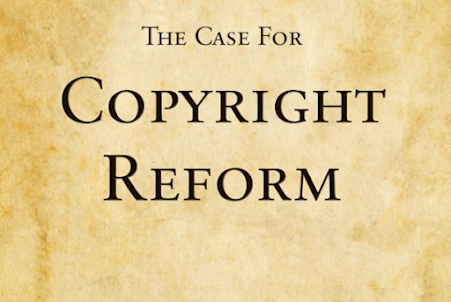
Book cover In this week’s assignment we’re reading Chapter 2 from the book “The Case for Copyright Reform” by Rick Falkvinge and Christian Engström. I’m going to write some thoughts about Chapter 2 and its ideas. The Chapter 2 “A Constructive Proposal for Copyright Reform” suggests some ideas for a copyright reform. It states that a big problem is the privacy. It is near impossible to enforce limited file sharing without surveilling everybody’s private communication. But that can’t be the solution: “The right to privacy is more important than the right of big media companies to continue to make money in the same way as before, because the latter right does not even exist.”   The text goes on with the proposals of the political party. I strongly agree with the first proposal called “Moral rights unchanged”. It says that the moral right of the author should always stay with the author. It shouldn’t be possible so sell the moral right. I actually learned about that in my home ...

Weekly Topics - Week 4: Challenges of the Global Information Society - A review

Image
Source: Pixabay.com This week’s topic it the report from Pekka Himanen “Challenges of the Global Information Society” from 2004. In this report, Himanen makes predictions for the future in regard to the business world and social developments. I am going to talk about some interesting aspects in that report and discuss, whether some of his predictions became true or not. Right at the start the authors identifies some global trends, that he thinks will definitely continue (or even get bigger) in the next few years (page 2). Some of these assumptions were spot on, for example the global division of labor. He says that routine productions will move to China and India. The most developed countries won’t rely on routine jobs anymore and will dive more in the creative fields. “The most developed countries cannot rely on routine jobs in the future, so they must specialize in creative work that is based on higher expertise and work to improve productivity both through increased added value ...

Weekly Topics - Week 3: How MMOs influenced the gaming industry

Image
Source: Dav, 2018, https://eastsidegamers.net/2018/a-brief-history-of-the-mmorpgs/ The blogging task for this week is to write about a short blog analysis about a new media component and how it has influenced its area. I am going to write about the Gaming Industry, in particular, how MMOs have influecned the gaming industry. MMO stands for massive multiplayer online games. The earliest version of a MMO started decades ago in form of text based Multiplayer User Dungeons (MUDs). A popular game was Colossal Cave Adventure, which was released in 1975 [1].  It was highly influenced by the tabletop fantasy game Dungeons and Dragons (DnD) [2].  Even though MMOs have been around for a long time, they didn’t gain that much popularity until the internet has risen to fame. But games in general have been around for very long time! Did you know, that the very first board game was invented 3500 before Christ? This game was invented in predynastic and first dynast burials in Egypt [3]...

Weekly Topics - Week 2: Internet technologies from the past

Image
The blogging task for this week is to write about two technologies from the earlier history of the Internet (before the Web, aka pre 1991 period) – one which has become obsolete and been replaced by more modern things, and another which survives to this day. I am going to combine these two technologies and present and old one, which has been replaced by a more modern one. But let’s start chronological: source: pixabay.com (free images) The Network-Control-Program (NCP) NCP was the Arpanets main protocol. If you don’t know what Arpanet is, I’ll give you a short introduction to that. Otherwise, you can just skip the next paragraph. Arpanet stood as a foundation of the new Internet. The idea was “to build a network that established communication links between multiple resource-sharing mainframe supercomputers that were miles apart”. [1] By the end of 1969 a connection had been established between four nodes. Initially, the information shared was using circuit-switching, but its ef...

Weekly Topics - Week 1: IT solutions in history

Image
This week I am going to talk about interesting IT inventions in history. Of course there are many, many interesting inventions. The three I picked interested me the most. The sources for my information are listed down below.  Let’s start with the first IT Invention:  The Black Box (1953) David Warren and his Black Box Prototype [3]  (imagesource: https://commons.wikimedia.org/wiki/File:Dave_Warren_with_BlackBox_Prototype.jpg) Did you know, that the Black Box did a huge contribution to the international airline safety? The Black Box is a Flight Recorder, invented in 1953 by David Warren [1]. Warren was a aeronautical research scientist and invented this device, because a lot of high-profile airplane crashes went unsolved. Interesting fact: Contrary to popular belief, the black box is mostly bright orange , not black (like the name suggests). The Black Box Flight Recorder is able to record flight data, cockpit sounds and instruments during a flight. The recorder can s...